
Heated Debate on ‘Vande Mataram’ in Lok Sabha; Asaduddin Owaisi Raises Strong Objections
A heated debate on Vande Mataram took place in Lok Sabha, where Asaduddin Owaisi raised strong constitutional, historical, and religious freedom concerns. He argued that national identity cannot be tied to a religious symbol and urged the government not to politicise Vande Mataram. Full report by Munsif News 24x7.

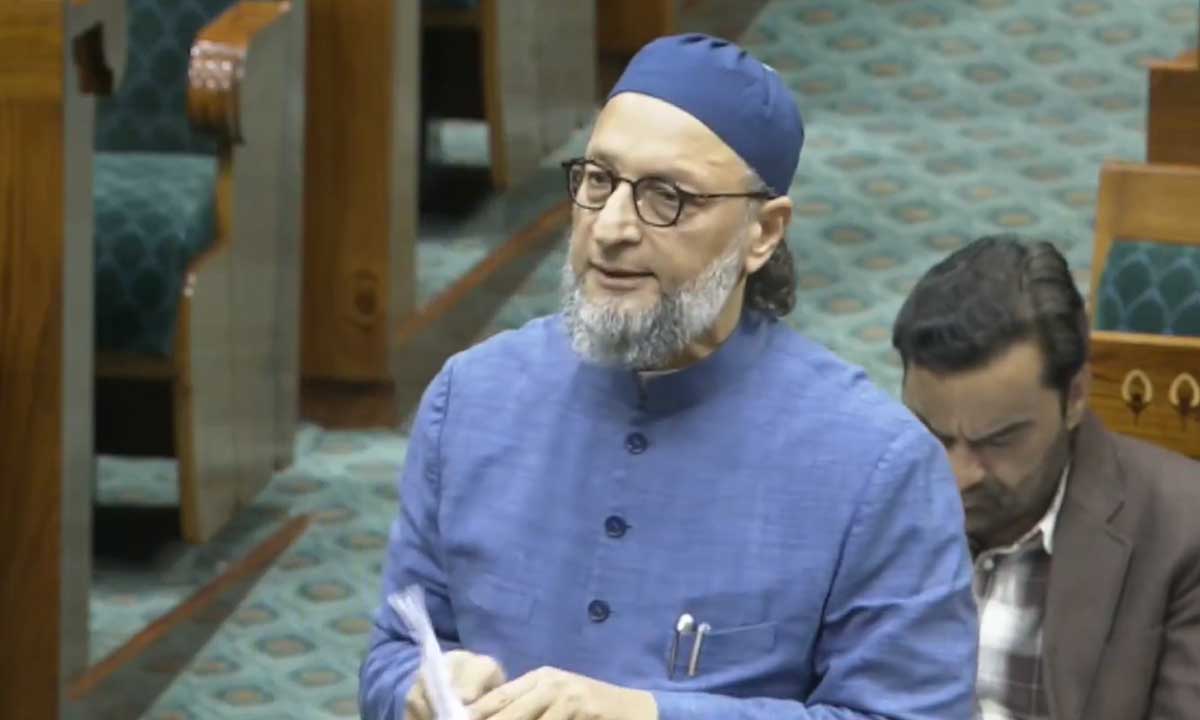
Munsif News 24×7 reports that a special discussion was held in the Lok Sabha on the 150th anniversary of the national song Vande Mataram. While Speaker Om Birla described it as a symbol of India’s unity and freedom struggle, the debate quickly escalated into a sharp exchange between the NDA and the INDIA bloc.
During this session, AIMIM President Asaduddin Owaisi delivered an elaborate speech, raising several constitutional, historical, and religious freedom–related objections.
Owaisi Questions Political Narrative and Historical Claims
Owaisi strongly criticised the Prime Minister’s reference to Muhammad Ali Jinnah, stating that:
- “We oppose Jinnah, but the historical fact is that in 1942 his party formed governments with the Congress.”
He said leaders must address facts instead of shifting blame.
Owaisi also objected to recent remarks by the Defence Minister about “Ummul Momineen” and “Ummul Kitab”, clarifying that:
- Muslims respect the Prophet’s wife as “mother,” but do not worship her
- The Qur’an is the word of God but not an object of worship
He called such statements “evidence of misunderstanding and religious ignorance.”
Also Read: Telangana Govt Releases Official Holiday List for 2026; Total Holidays Set to Cross 100 This Year
“The Constitution Begins With ‘We the People,’ Not Any Religious Symbol”
Owaisi emphasised that the Indian Constitution was intentionally written without invoking any deity or religious phrase.
He highlighted three major points:
- The Constituent Assembly rejected proposals to begin the Constitution with religious references or Vande Mataram.
- The Preamble guarantees liberty of thought, expression, belief, faith, and worship.
- Therefore, no citizen can be forced to sing or worship any religious symbol.
He cited major Supreme Court judgments:
- 1986 Jehovah’s Witnesses case: singing the national anthem is not mandatory; respect is enough.
- 2017 Supreme Court observation: no compulsion can be imposed regarding Vande Mataram.
Owaisi argued that Indian law nowhere mandates compulsory singing of the national song.
“If Nationalism Is Measured by Vande Mataram, What About Our Freedom Fighters?”
To counter the nationalist argument, Owaisi cited Muslim freedom fighters such as:
- Molvi Alauddin
- Abbas Khan
- Fazl-e-Haq Khairabadi
- Mahmood-ul-Hasan
- Hussain Ahmad Madani
- Inayatullah Kafi
He asked:
“If Vande Mataram is the test of nationalism, what was the nationalism of those who gave their lives for India?”
He said India belongs to all faiths, all languages, and all communities, and no single religious symbol can represent the entire nation.
“Patriotism Means Fighting Injustice, Not Forced Slogans”
Owaisi clarified that his Muslim identity does not contradict love for India.
He stated that true patriotism means:
- Fighting injustice
- Ending poverty and unemployment
- Building peace
- Eliminating terrorism and exploitation
He warned that forcing a single identity on a diverse country goes against the Constitution and Supreme Court rulings.
Owaisi: “Do Not Ask Us for Certificates of Loyalty”
In his concluding remarks, Owaisi said:
“Do not ask us for certificates of loyalty. Our loyalty is written in the sacrifices of our freedom fighters.”
He urged the government not to use Vande Mataram as a political tool and to uphold the principles of the Constitution, including religious freedom.


