
US retains top spot as India’s largest LPG supplier in June
The United States retained its position as India's largest supplier of liquefied petroleum gas (LPG) in June, extending its lead over traditional Gulf exporters as the country continued to diversify energy imports in response to geopolitical uncertainties in West Asia.

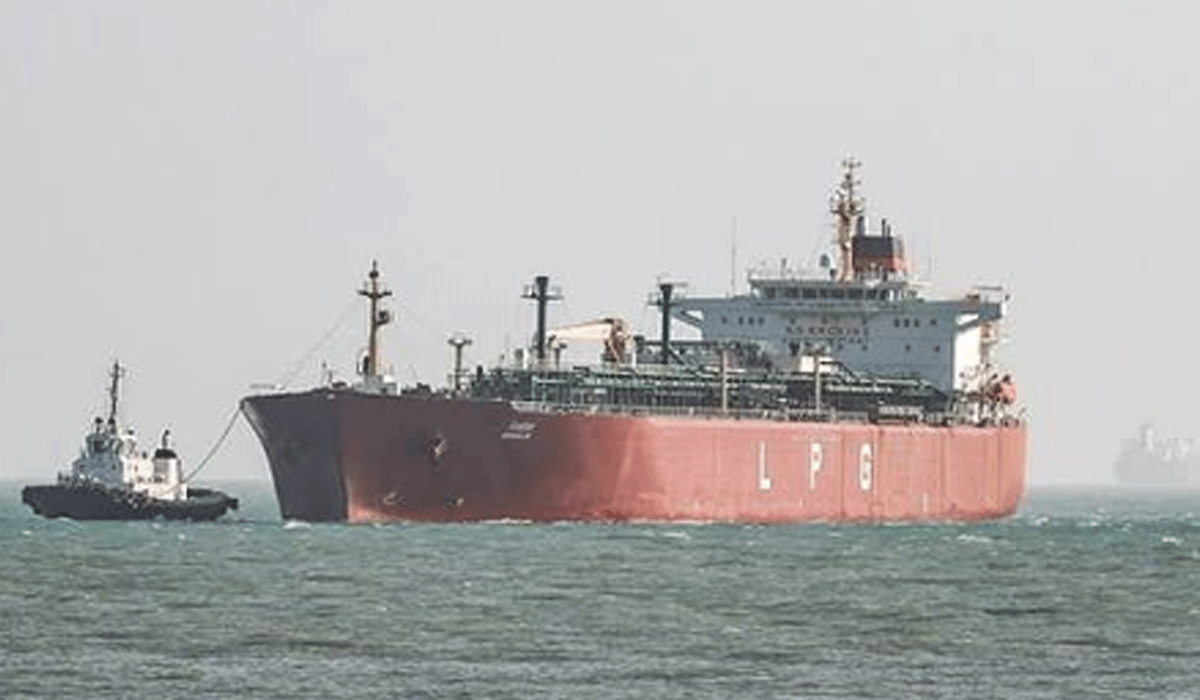
New Delhi: The United States retained its position as India’s largest supplier of liquefied petroleum gas (LPG) in June, extending its lead over traditional Gulf exporters as the country continued to diversify energy imports in response to geopolitical uncertainties in West Asia.
According to data from commodity analytics firm Kpler, India imported 773.78 thousand metric tonnes (TMT) of LPG from the US in June, marking a 19.4 per cent increase from May. Overall, India’s LPG imports rose 3 per cent during the month to 1,191 TMT, compared with 1,155 TMT in May.
The UAE emerged as the second-largest supplier, with shipments increasing 16.6 per cent to 157 TMT from 134.7 TMT in the previous month. Saudi Arabia and Kuwait each supplied 64 TMT of LPG during June.
India’s growing reliance on US LPG comes as part of a broader effort to diversify supplies following disruptions caused by the recent West Asia conflict. State-run refiners have already signed a long-term agreement to import 2.2 million tonnes of LPG from the US beginning in 2026, strengthening bilateral energy ties and reducing dependence on Gulf producers.
Industry sources said India has secured adequate supplies of both crude oil and LPG through August, easing concerns over domestic availability after the reopening of the Strait of Hormuz restored the movement of Gulf energy cargoes.
To strengthen energy security, India has expanded LPG sourcing beyond its traditional suppliers, increasing imports not only from the US but also from countries such as Oman, Argentina, Nigeria, Algeria and Egypt.
Before the outbreak of the West Asia conflict, nearly 90 per cent of India’s LPG imports passed through the Strait of Hormuz, underscoring the country’s heavy dependence on the Gulf region. Supply disruptions during the conflict prompted refiners to widen their sourcing basket to reduce exposure to geopolitical risks.
Analysts believe India’s diversification strategy is likely to continue even after regional tensions ease. While the Gulf is expected to remain a crucial supplier of crude oil and LPG, refiners are expected to maintain a broader mix of import sources to enhance supply resilience.


