
Eating Chicken on the Ganga Is Not a Crime, SC Judge Raises Concern Over Arrest of Muslim Youth
Supreme Court Justice Ujjal Bhuyan has expressed concern over what he described as the shrinking space for dissent in the country, saying that ordinary and lawful activities are increasingly being given a criminal colour, raising serious concerns for democratic values and civil liberties.

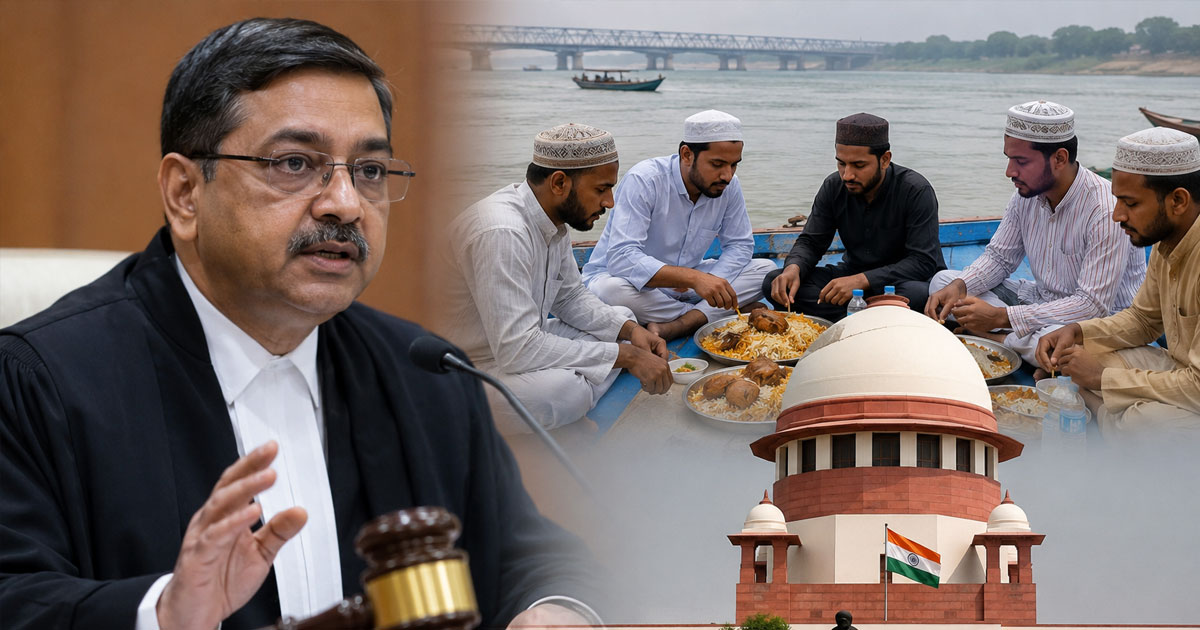
Hyderabad/Bhopal: Supreme Court Justice Ujjal Bhuyan has expressed concern over what he described as the shrinking space for dissent in the country, saying that ordinary and lawful activities are increasingly being given a criminal colour, raising serious concerns for democratic values and civil liberties.
Speaking at the fourth Justice G.P. Singh Memorial Lecture at the National Law Institute University (NLIU) in Bhopal, Justice Bhuyan referred to the case of 14 Muslim youths who were arrested over allegations of eating chicken biryani while breaking their Ramadan fast on a boat on the Ganga River.
“Eating chicken biryani is not a crime, nor is there any law that prohibits eating chicken on the Ganga,” Justice Bhuyan said, according to the account of his remarks. He noted that despite this, the youths were arrested and remained in jail for nearly three months.
Justice Bhuyan questioned why citizens involved in cases related to peaceful protests or dissent often do not receive timely relief from the courts. He said that while courts frequently provide bail or other legal remedies, such relief can sometimes come after considerable delay, leaving citizens to face unnecessary hardship.
Follow for more details: munsifdaily.com
He also pointed to instances where stringent conditions are imposed while granting bail, including restrictions on attending public gatherings, expressing views on social media or travelling abroad. According to him, such conditions can sometimes have an adverse impact on fundamental rights and individual freedoms.
Justice Bhuyan emphasised that expressing dissent and holding peaceful protests are fundamental constitutional rights. He said that debate, dialogue and disagreement are at the heart of democracy, warning that treating ordinary activities as criminal acts is a concerning trend.
He further said that such cases raise serious questions about whether stringent bail conditions could indirectly send a message discouraging citizens from expressing dissent or exercising their democratic freedoms.


