
Cong leaders pay tribute to Indira Gandhi on death anniversary; recall her sacrifices, legacy
Congress leaders on Saturday paid tributes to late Prime Minister Indira Gandhi on her 42nd death anniversary, remembering her contributions and sacrifices for the country and describing her as a leader whose legacy continues to inspire generations.

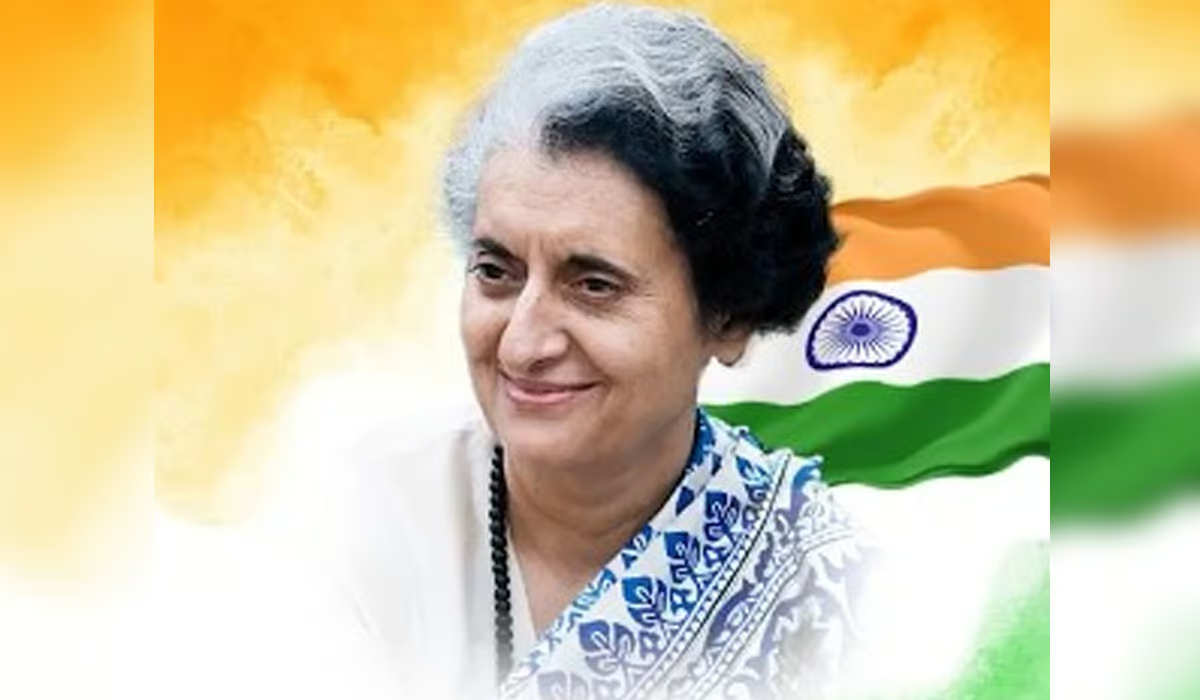
New Delhi: Congress leaders on Saturday paid tributes to late Prime Minister Indira Gandhi on her 42nd death anniversary, remembering her contributions and sacrifices for the country and describing her as a leader whose legacy continues to inspire generations.
Congress President Mallikarjun Kharge, Congress Parliamentary Party Chairperson Sonia Gandhi, Leader of Opposition in the Lok Sabha Rahul Gandhi and other party leaders visited the Indira Gandhi Memorial and offered floral tributes to the late Prime Minister at Shakti Sthal.
In Bengaluru, Karnataka Pradesh Congress Committee President B.K. Hariprasad remembered Indira Gandhi as the ‘Iron Lady’ of India and said she had sacrificed her life for the unity of the country.
“Today is the 42nd death anniversary of my great leader, the Iron Lady of India, Indira Gandhi. It is the 42nd death anniversary. Indira Gandhi sacrificed her life for the unity of this country. Her great sacrifices will be remembered forever when we talk about the unity of the great country that is India,” he told IANS.
All India Mahila Congress President Alka Lamba also paid tribute to Indira Gandhi, recalling her contribution to women’s political participation and the establishment of the Mahila Congress.
“Indira-ji can never be forgotten; there is no question of merely remembering her. She lives on in our memories, through her sacrifice and devotion. Martyr, India’s first female Prime Minister, Bharat Ratna Indira Gandhi-ji, on her martyrdom day, we remember her,” Lamba said.
She said she felt proud to lead an organisation whose foundation and establishment were laid by Indira Gandhi, adding that the late Prime Minister had not only provided women with an organisation but had also insisted on their active participation in politics.
“That dream was realised by Rajiv Gandhi by bringing 33 per cent reservation for women in Panchayati Raj. Following that, Sonia Gandhi took it further by passing the Women’s Reservation Bill…,” she added.
Indian Youth Congress (IYC) President, Uday Bhanu Chib, also remembered Indira Gandhi’s contribution to the country and said her sacrifice continued to inspire the organisation.
“We remember Indira Gandhi. We remember what she has done for this country. She has sacrificed her life for the betterment of our country, Hindustan, and we are following the same path,” he said.
Indira Gandhi was born on November 19, 1917, in Allahabad, Uttar Pradesh, into a Kashmiri Pandit family. She was the daughter of India’s first Prime Minister, Jawaharlal Nehru, and Kamala Nehru.
National Integration Day, observed annually on November 19, coincides with Indira Gandhi’s birth anniversary and serves to honour her pivotal role in shaping India’s political, social, and economic journey.
As India progresses toward becoming a global power, National Integration Day acts as a reminder of Gandhi’s contributions to unifying the nation. The observance was instituted by the Indian National Congress in 1985 to commemorate her efforts in promoting unity.
During her tenure as Prime Minister from 1966 to 1977 and again from 1980 until her assassination in 1984, Indira Gandhi worked relentlessly to strengthen national integration. Her political career was defined by her unwavering commitment to unity and integrity.
One of her landmark achievements was her decisive leadership during the 1971 India-Pakistan war, which led to the creation of Bangladesh. Her actions solidified her reputation as a leader with a strong vision and resolve.
The Green Revolution led by Indira Gandhi supported and expanded high-yielding agricultural policies that helped steer India toward food self-reliance and security.
Indira Gandhi also authorised India’s first peaceful nuclear test in Pokhran in 1974 and significantly advanced the country’s space program.
She chaired the Non-Aligned Movement and positioned India as an influential voice for developing nations during the Cold War and also nationalised 14 of India’s largest commercial banks to redirect credit toward agriculture, small industries, and rural development.


