
Golden hour critical in neurotrauma and road accident care, says Dr. Bhaskar Rao
The conference is being organised by the Neurotrauma Society of India in collaboration with the Department of Neurosurgery, KIMS Hospitals.

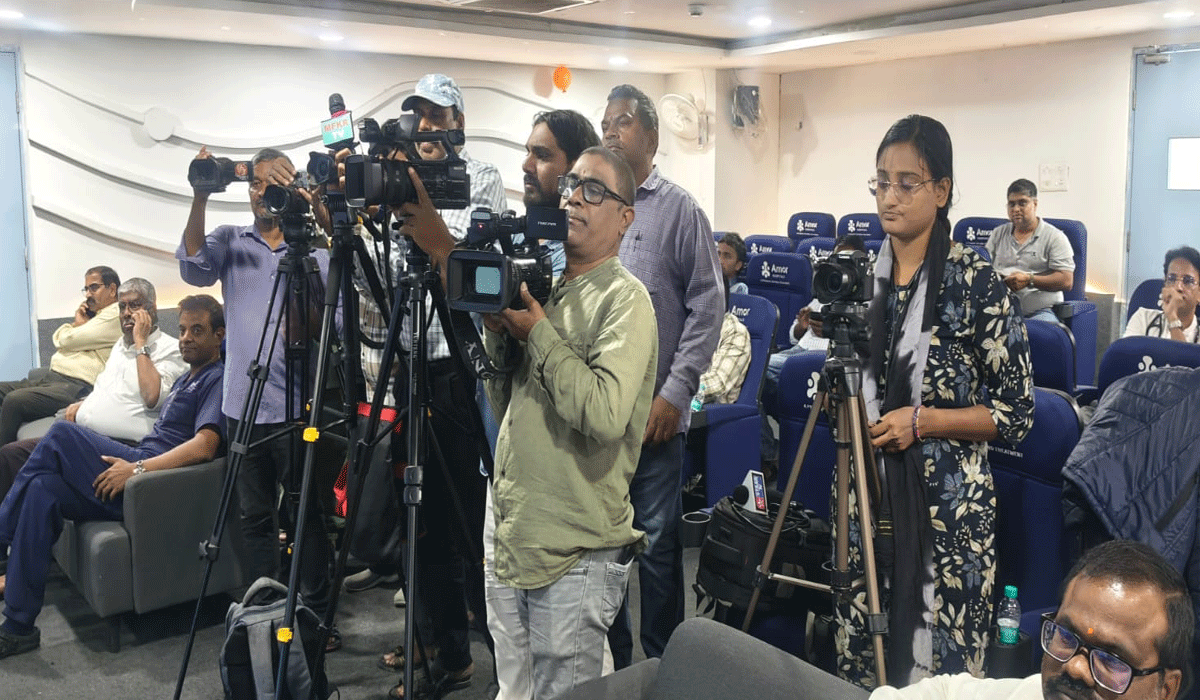
HYDERABAD: Timely treatment within the first hour after a road accident, head injury, or spinal trauma can significantly improve survival and reduce disability, said Dr. Bhaskar Rao Bollineni, Chairman and Managing Director, KIMS Group of Hospitals, while inaugurating the three-day National Conference on Neurotrauma and Neurotrauma Nursing in Hyderabad on Friday.
The conference is being organised by the Neurotrauma Society of India in collaboration with the Department of Neurosurgery, KIMS Hospitals.
Speaking on the occasion, Dr. Bhaskar Rao said road traffic injuries had emerged as a major cause of disability among young people in India. He noted that head injuries due to falls were more common among children, motorcycle accidents were a major contributor among young adults, road traffic injuries predominated in middle-aged individuals, and falls among the elderly frequently resulted in brain and spinal injuries. “The pattern of injury varies across age groups, and treatment strategies must be tailored accordingly,” he said.
Dr. Manas Panigrahi, Head of the Department of Neurosurgery and Senior Consultant Neurosurgeon at KIMS Hospitals, described traumatic brain injury (TBI) as a growing public health challenge in India. Citing the World Health Organization’s 2023 report, he said the global incidence of TBI had declined by 5.5%, whereas India had recorded an 11.1% increase.
India accounts for 10% of global road traffic deaths despite having only about 1% of the world’s vehicles, he said, adding that this reflected serious gaps in road safety systems. Referring to World Bank 2021 data, he pointed out that while the United States recorded about 2.21 million road accidents and 27,461 deaths, India reported 480,652 accidents but 150,785 deaths, indicating a disproportionately high fatality burden.
More than half of road traffic deaths in India involve pedestrians, cyclists, and motorcyclists, Dr. Panigrahi said. About 66% of crashes occur in rural areas, and mortality is nearly twice as high among low-income households.
He stressed that proper helmet use could reduce the risk of TBI by up to 74%, but helmet compliance remains low, ranging from 22% to 55%. Nearly one-third of trauma patients reach hospital more than 24 hours after injury, a delay that substantially worsens outcomes, he added.
Quoting a NIMHANS study, Dr. Panigrahi said 77% of patients had mild TBI and 48% had normal CT scans, underscoring the need for medical evaluation even when a head injury appears minor.
He called for stronger public awareness, strict enforcement of helmet laws, improved emergency services in rural areas, and systems that ensure accident victims reach hospital within the golden hour, which could significantly reduce TBI-related mortality.
Highlighting the importance of nursing care in neurotrauma, he said early assessment of airway, blood pressure, level of consciousness, pupillary response, and limb movements immediately after admission often plays a decisive role in saving lives.
The scientific programme includes sessions on emergency neurotrauma care, golden-hour management of road traffic injuries, brain swelling monitoring, neurocritical care, postoperative care, spinal trauma management, neurotrauma in children and the elderly, artificial intelligence in neurotrauma, and rehabilitation.
A dedicated Neurotrauma Nursing Symposium is conducting practical workshops on early recognition of neurological deterioration, operating theatre safety, spinal trauma nursing, neuro-ICU monitoring, and safe transfer of patients from intensive care units to wards.
Leading neurosurgeons, neurocritical care specialists, trauma experts, and nursing educators from across the country are participating in the conference. Dr. Panigrahi said the meeting aimed to strengthen coordinated neurotrauma care involving doctors, nurses, and emergency medical personnel.
Among those present were Dr. Raghavendra, Consultant Neuro and Spine Surgeon, KIMS Hospital Gachibowli; Dr. Swetha, Neurosurgeon, KIMS Hospitals Secunderabad; Dr. Sumit Sinha, President of the Neurotrauma Society of India; and members of the organising committee.
For mor details: Munsif daily.com


