
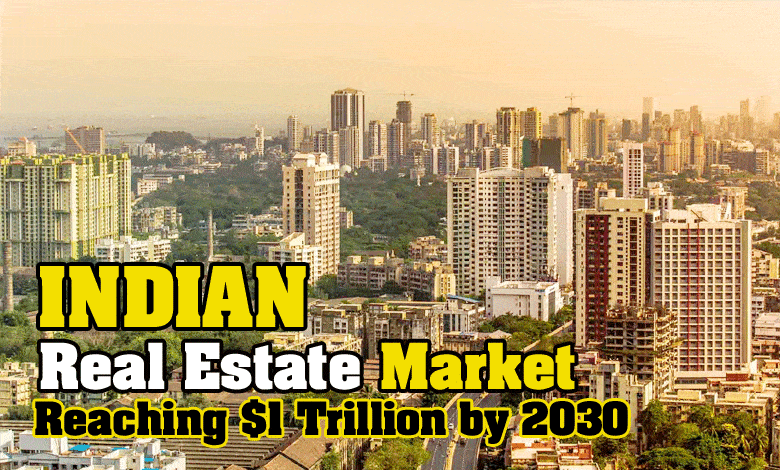
New Delhi: The Indian real estate sector is undergoing a transformative phase, backed by government policies, increasing use of digital technologies, and a growing focus on sustainability. By 2030, the industry is projected to achieve a market size of $1 trillion, cementing its role as a crucial part of India’s economy.
Table of Contents
Also Read: Hyderabad Real Estate Market Booms Despite Challenges
Key Highlights:
- Employment Generation: The real estate sector is the second-largest employer in India, following agriculture, contributing to 18% of the nation’s workforce.
- GDP contribution: The sector’s share of India’s GDP is anticipated to rise from the current 7.3% to 13% by 2030, showcasing its growing economic significance.
- Shift in Consumer Preferences: There is a noticeable shift towards luxury housing and premium amenities, indicating an evolving market driven by affluent buyers and urbanization.
State-wise growth trends:
- Delhi:
- Delhi remains one of the top cities in real estate activity, with constant urbanization and modernization fueling demand. The city is seeing a surge in residential and commercial properties, driven by infrastructure upgrades and improved connectivity.
- Mumbai:
- As India’s financial capital, Mumbai’s real estate market continues to thrive, with high demand for premium and luxury housing. The city’s commercial real estate also shows signs of expansion, particularly in business districts.
- Pune:
- Pune has experienced significant growth in residential real estate, attracting professionals and students due to its thriving IT sector. Enhanced connectivity through expressways and metro systems has bolstered the city’s appeal to homebuyers and investors.
- Hyderabad:
- With a rapidly developing IT hub and a booming startup ecosystem, Hyderabad is seeing a rise in both residential and commercial real estate demand. Areas like Hitech City and Gachibowli are at the forefront of this growth.
- NCR (National Capital Region):
- The NCR region, encompassing cities like Noida, Gurugram, and Ghaziabad, has witnessed a rapid increase in real estate investments. Emerging areas like Manesar and New Gurgaon, with advanced infrastructure and affordable pricing, have become prime investment hubs.
- Tier-2 Cities:
- A report by PropEquity highlighted a 11% increase in home sales in the top 30 Tier-2 cities. This reflects a growing trend of suburban migration as people seek more affordable housing options. These cities have also seen significant infrastructural developments, making them increasingly attractive for investment.
Technology and Sustainability Shaping the Future:
- Smart Homes: The integration of smart technologies, including AI-powered amenities and energy-efficient solutions, is becoming a standard feature in new developments. This is further being driven by consumers’ growing demand for convenience and sustainability.
- Sustainability: The push towards environmentally conscious construction practices is evident, with developers incorporating green building techniques, such as rainwater harvesting, solar panels, and sustainable materials.
Noteworthy Developments and Policy Impact:
- Pradhan Mantri Awas Yojana (PMAY): The government’s affordable housing program has made homeownership more accessible to lower-income groups, providing financial assistance and subsidies.
- Urban Infrastructure: The expansion of metro networks and expressways in Tier-2 and Tier-3 cities has significantly boosted real estate development in these regions.
Industry Leaders’ insights:
- Vikas Agarwal, COO of Worldwide Realty: “Modern urban infrastructure has significantly improved connectivity in these areas, making them highly attractive for investment. Real estate prices in these regions are rising quickly due to their integration into metropolitan structures.”
- Vivek Sinha, Director of Sales and Marketing, KDMG Group: “Technology, sustainability, and improved housing affordability have redefined the real estate sector. The past year marked a significant milestone, with initiatives like PMAY expanding housing access to a broader demographic.”
- Mohit Mittal, CEO of Mors: “Urban infrastructure development is the key driver of growth in Tier-2 and Tier-3 cities. These markets offer affordable properties, stable price appreciation, and attractive long-term capital gains.”
In conclusion, India’s real estate sector is undergoing rapid modernization, and the combination of technological innovations, improved infrastructure, and government support is poised to propel it to a $1 trillion market size by 2030. The emerging trends, state-wise growth, and adoption of sustainability will continue to shape this dynamic and promising sector.