
Nine-month pregnant woman suffers brain stroke, saved by KIMS doctors in Vizag
Doctors at KIMS Seethammadhara successfully treated a nine-month pregnant woman who suffered a life-threatening ischemic stroke, performing an emergency mechanical thrombectomy and subsequently facilitating the safe delivery of a healthy baby boy.

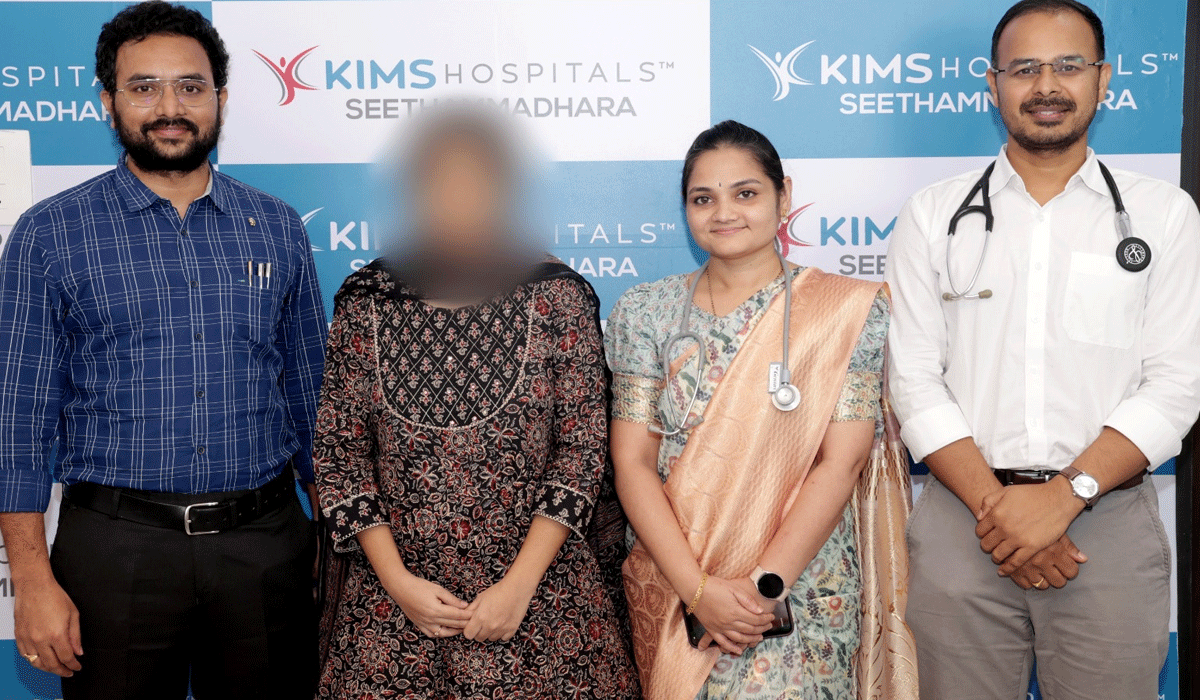

- Emergency mechanical thrombectomy restores blood flow; healthy baby boy delivered later
VISAKHAPATNAM: Doctors at KIMS Seethammadhara successfully treated a nine-month pregnant woman who suffered a life-threatening ischemic stroke, performing an emergency mechanical thrombectomy and subsequently facilitating the safe delivery of a healthy baby boy.
The details of the case were shared by Dr. Venkatesh Pothula, Chief Consultant, Neuro and Vascular Intervention; Dr. Pavani Manikya Palepu, Consultant Gynaecologist; and Dr. Raja Kumar P., Consultant Neurologist, who were part of the team that treated the patient.
The woman from the Visakhapatnam region was brought to KIMS Seethammadhara with sudden-onset weakness on the right side of the body and loss of speech. Investigations revealed severe blockages in the major blood vessels on the left side of the brain, indicating an acute ischemic stroke requiring immediate intervention.
As the patient was in the final stage of pregnancy, the treatment posed additional challenges. The medical team had to restore blood flow to the brain at the earliest while simultaneously ensuring the safety of the unborn baby. Medication selection and dosage, blood-thinning medication, blood pressure and circulation management, neurological status and continuous fetal monitoring were carefully reviewed throughout the treatment.
Led by Dr. Venkatesh Pothula, the Neuro and Vascular Intervention team performed an emergency mechanical thrombectomy to remove the blood clot blocking the brain artery. Special precautions were taken during the procedure to minimise radiation exposure to the foetus. The clot was successfully removed and complete restoration of blood flow, classified as TICI-3 reperfusion, was achieved.
During the procedure and subsequent recovery, the obstetrics team led by senior gynaecologist Dr. Pavani Manikya Palepu closely monitored both the mother and the foetus. Once cerebral blood flow was restored and the patient’s neurological condition stabilised, the team planned the timing and mode of delivery. A Caesarean section was subsequently performed and the woman delivered a healthy baby boy.
Dr. Venkatesh Pothula said that large-vessel ischemic stroke during pregnancy was uncommon but could be life-threatening, particularly when it occurred in the final stages of pregnancy.
“This was not a routine stroke case. Rapid identification of the major vessel blockage and immediate transfer for mechanical thrombectomy were critical. Every aspect of the treatment, including the choice and dosage of medication and continuous monitoring, had to be reviewed carefully. The safety of both the mother and the baby remained our priority,” said Dr. Raja Kumar P.
“Since the pregnancy was nearly full term, our responsibility was to protect the mother’s health while continuously monitoring the condition of the baby. Close coordination between the neurology, neuro-intervention, anaesthesia and obstetrics teams enabled us to manage the emergency safely and subsequently conduct the delivery successfully,” said Dr. Pavani.
The doctors emphasised that symptoms of stroke during pregnancy require immediate medical attention and should not be delayed because of the pregnancy. They said pregnancy by itself should not be considered an absolute barrier to emergency mechanical thrombectomy. In appropriate cases, they said, timely intervention by a multidisciplinary team can help restore blood flow to the brain while ensuring appropriate monitoring and safety measures for the foetus.
Follow for more details: Munsif daily.com


