
Omar Abdullah reviews progress under special assistance to states for capital investment scheme
J&K Chief Minister Omar Abdullah on Tuesday reviewed the progress of works under the scheme for special assistance to states for capital investment (SASCI).

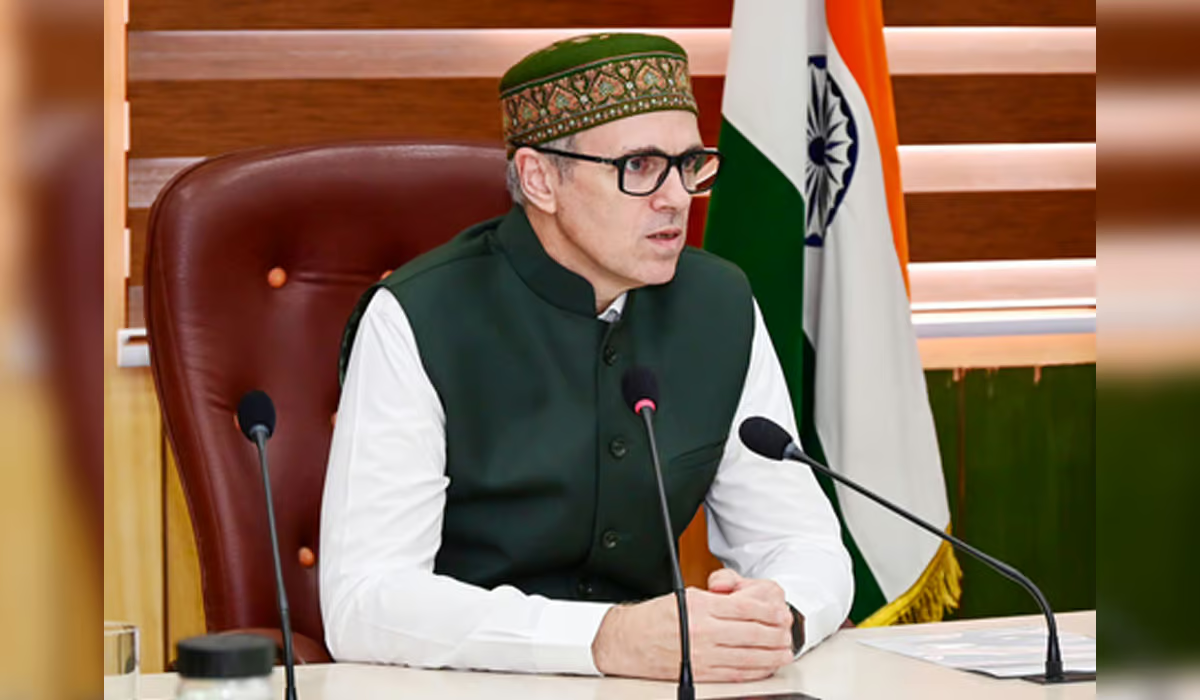
Jammu: J&K Chief Minister Omar Abdullah on Tuesday reviewed the progress of works under the scheme for special assistance to states for capital investment (SASCI).
The Chief Minister reviewed both physical and financial progress across key sectors, including Public Works, Jal Shakti, Youth Services and Sports, Power Development, and Housing & Urban Development.
Special focus was given to the Disaster Management component to augment mitigation resilience and restore infrastructure damaged in natural disasters.
Chief Minister issued directions for time-bound completion of ongoing SASCI works, within the sunset period, to achieve financial targets under the scheme; for expedited execution of SASCI Disaster component works to enhance overall disaster resilience; and for early identification and creation of a robust shelf of projects to finalise the SASCI 2027-28 plan.
The Chief Minister emphasised seamless inter-departmental coordination and strict adherence to timelines to ensure maximum fund utilisation and the creation of durable capital assets across Jammu & Kashmir.
The SASCI is a landmark initiative launched by the Ministry of Finance, Government of India, to provide 50-year interest-free loans to state governments to boost infrastructure and finance capital expenditure.
It was initially introduced during the COVID-19 pandemic (FY 2020–21) to prevent a sharp slowdown in public investment; the scheme has expanded significantly, allocating upwards of Rs 1.5 lakh crore in recent fiscal years.
Under this scheme, the central government provides funds in the form of a 50-year sovereign loan with zero interest.
This avoids immediate debt-servicing burdens on states. Capital expenditure under SASCI creates assets like roads, bridges, and digital systems, which historically generate roughly Rs 3 in GDP growth for every Re 1 spent.
Funds are allocated across multiple parts—some parts are unrestricted, while others are reform-linked to incentivise state-level structural upgrades.


