
Hyderabad needs urban planning reforms, not just traffic management: Experts
Hyderabad must move beyond conventional traffic management and address deeper urban planning and governance challenges to resolve its growing mobility crisis, experts said at a panel discussion during Cyberabad Moves 2026 at T-Hub in Raidurgam on Thursday.

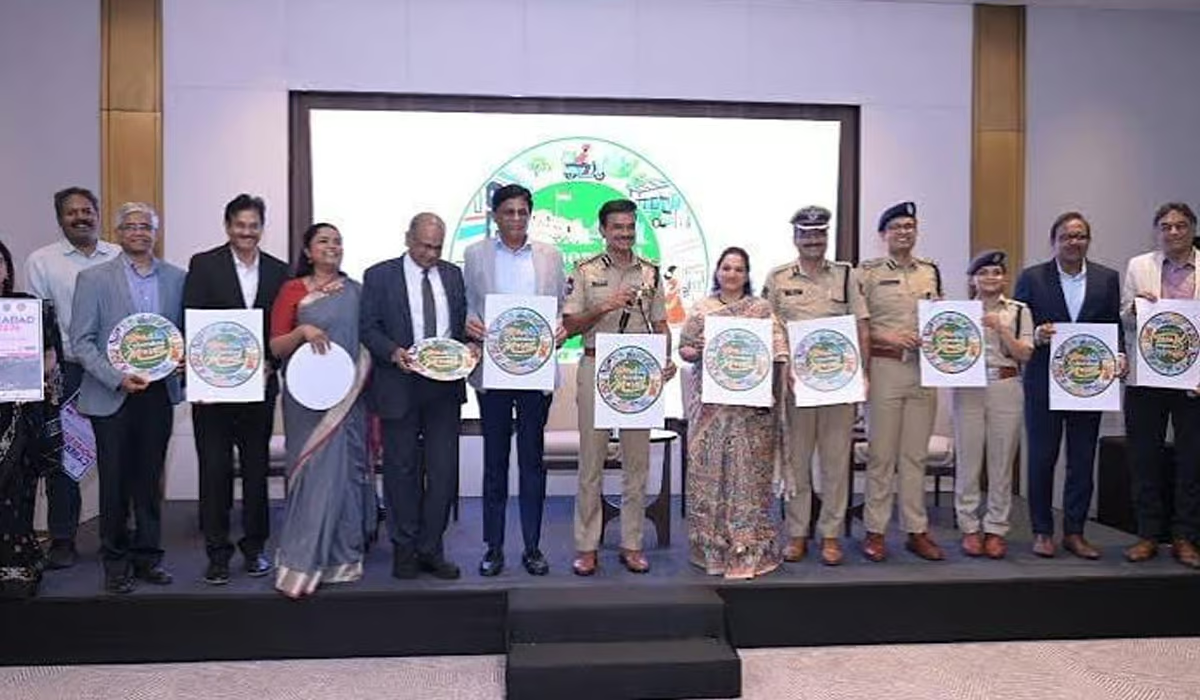
HYDERABAD: Hyderabad must move beyond conventional traffic management and address deeper urban planning and governance challenges to resolve its growing mobility crisis, experts said at a panel discussion during Cyberabad Moves 2026 at T-Hub in Raidurgam on Thursday.
Special Chief Secretary Jayesh Ranjan said authorities must first identify the root causes of congestion instead of relying on isolated solutions such as common mobility cards and pedestrian crossings. He called for better utilisation of road space, technology-driven interventions and policy changes to transform commuting patterns.
Highlighting the growing dependence on private vehicles, Ranjan said 9.3 million new vehicles had been registered in the city over the past year. A peak-hour survey at Cyber Towers found 10,138 people travelling alone in cars and another 3,584 vehicles carrying just two occupants.
Sashi Verma, Chief Technology Officer of Transport for London, identified fragmented governance as a major obstacle, with urban development and mobility responsibilities spread across multiple agencies. He called for an empowered mechanism to integrate decision-making, funding and accountability. He also criticised planning regulations that leave privately owned open spaces inaccessible to the public.
Former Bogota mayor Enrique Penalosa said Hyderabad must decide what kind of city it wants to become. He cautioned that expanding Metro Rail and mass transport alone would not eliminate congestion, citing Delhi’s extensive Metro network and the need to regulate private vehicle usage during peak hours.
He proposed satellite-based vehicle tracking and congestion charges, under which motorists would pay more to use busy roads during peak hours. He also called for strict action against motorcycles riding or parking on footpaths. On high-demand roads, he advocated dedicated Bus Rapid Transit (BRT) corridors with centrally located bus lanes, supported by strict enforcement. He stressed the importance of quality footpaths, cycling corridors and public parks.
Citing Bogota’s experience, Penalosa’s transport reforms included the introduction of the TransMilenio BRT system in December 2000. The first corridor recorded a reduction in annual traffic fatalities from an average of 61 to 21 during its first nine years, according to an OECD report.
Transport adviser N V S Reddy suggested integrating employee transport services with the Cyberabad Police’s Hawk Eye app to improve women’s safety, including first- and last-mile connectivity. Rekha Srinivasan of United Way of Hyderabad stressed research-based interventions, while industry representatives called for staggered office timings and sustained corporate participation.
The discussion assumes significance as Hyderabad’s IT corridor continues to experience severe congestion. In June 2024, heavy rains triggered traffic jams on the Durgam Cheruvu Cable Bridge and IKEA Junction stretches, with commuters reporting delays of one to two hours or more. Experts said the city needs an integrated mobility strategy rather than temporary traffic diversions to ensure safer and smoother commuting.
Follow for more details: Munsifdaily.com


