
Beware! Don’t fall for PM Modi’s deepfake videos about welfare schemes; it can be scam
According to the NCTAU, fraudsters are circulating deceptive advertisements on Meta platforms, including Facebook and Instagram, featuring manipulated videos of prominent public and political figures purportedly announcing welfare schemes for people in need

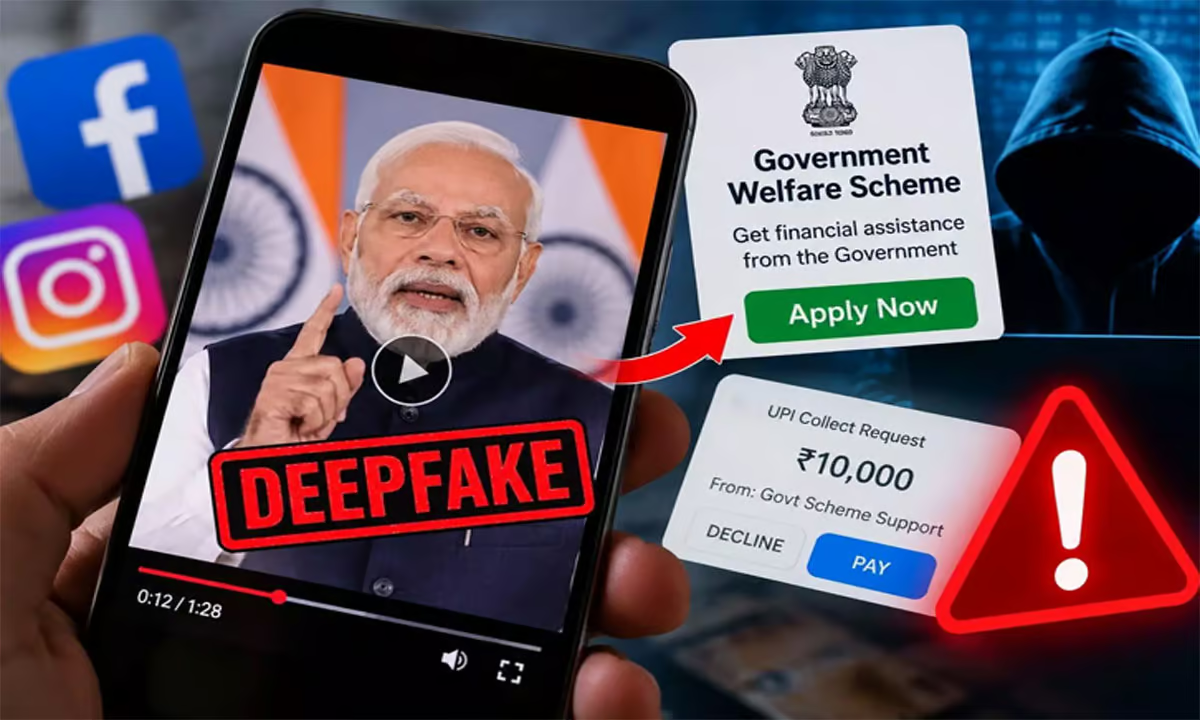

- According to the NCTAU, fraudsters are circulating deceptive advertisements on Meta platforms, including Facebook and Instagram, featuring manipulated videos of prominent public and political figures purportedly announcing welfare schemes for people in need.
New Delhi : Fraudsters are using deepfake videos of Prime Minister Narendra Modi, Union Finance Minister and Chief Ministers to promote fake government welfare schemes on Facebook and Instagram, tricking people into paying bogus fees and taxes to claim financial assistance.
The National Cybercrime Threat Analytics Unit (NCTAU) has also warned of scams in which fake cashback offers lure users into authorising UPI payments that drain their bank accounts.
Deepfake Ads promise government financial assistance
According to the NCTAU, fraudsters are circulating deceptive advertisements on Meta platforms, including Facebook and Instagram, featuring manipulated videos of prominent public and political figures purportedly announcing welfare schemes for people in need.
The advertisements promise financial assistance and direct users to phone numbers, WhatsApp chats, or fraudulent websites to claim the benefits. Some of these advertisements are categorised as political advertisements.
By using familiar public figures to endorse the purported schemes, fraudsters attempt to make their claims appear genuine and persuade people to respond.
Victims asked to pay fees to claim benefits
Once victims show interest, fraudsters demand money under the pretext of taxes, processing charges, registration fees, verification costs, and other administrative expenses.
Victims are often asked to make multiple payments with the assurance that the promised financial assistance will be released after the charges are paid. However, the promised benefits never materialise, leaving victims with financial losses.
In some cases, victims also receive calls from international numbers, particularly those beginning with Pakistan’s country code (+92). Callers claim that the recipients have been randomly selected to receive financial assistance.
Fake cashback offers exploit UPI payments
The cybercrime unit has also flagged fraud involving fake scratch-card and spin-and-win contests that promise cashback rewards or prize money.
Victims are redirected to websites or payment applications and persuaded to enter their UPI PIN under the pretext of receiving the promised reward. However, entering the PIN authorises a payment, resulting in money being debited from their accounts and transferred to fraudsters.
The unit has warned that victims may suffer substantial cumulative losses after making repeated payments or approving fraudulent transactions.
How to identify and avoid these scams
The NCTAU has advised people to verify welfare schemes through the official websites of the concerned government departments before responding to social media advertisements.
People should also verify the identity of anyone claiming to represent a government department and independently confirm the purpose and recipient of any payment request.
The unit has cautioned users against sharing Aadhaar and PAN details, bank account information, one-time passwords (OTPs), or UPI PINs with unknown persons. Videos and voice recordings featuring public officials should also be verified through official sources before being trusted.
Users must carefully check the recipient and transaction details before approving UPI collect requests. A UPI PIN is required to authorise a payment, not to receive money.
Where to report Cyber Fraud
People who encounter such scams or lose money to cyber fraud should immediately call the national cybercrime helpline **1930** or register a complaint on the official portal, [www.cybercrime.gov.in](https://www.cybercrime.gov.in/).


