
Andhra braces for Cyclone Akvan after Arnab, Murasu; landfall likely on November 20
Andhra Pradesh is bracing for another major cyclone as Cyclonic Storm Akvan over the Bay of Bengal is expected to intensify into a very severe cyclonic storm before crossing the state's coast on November 20.

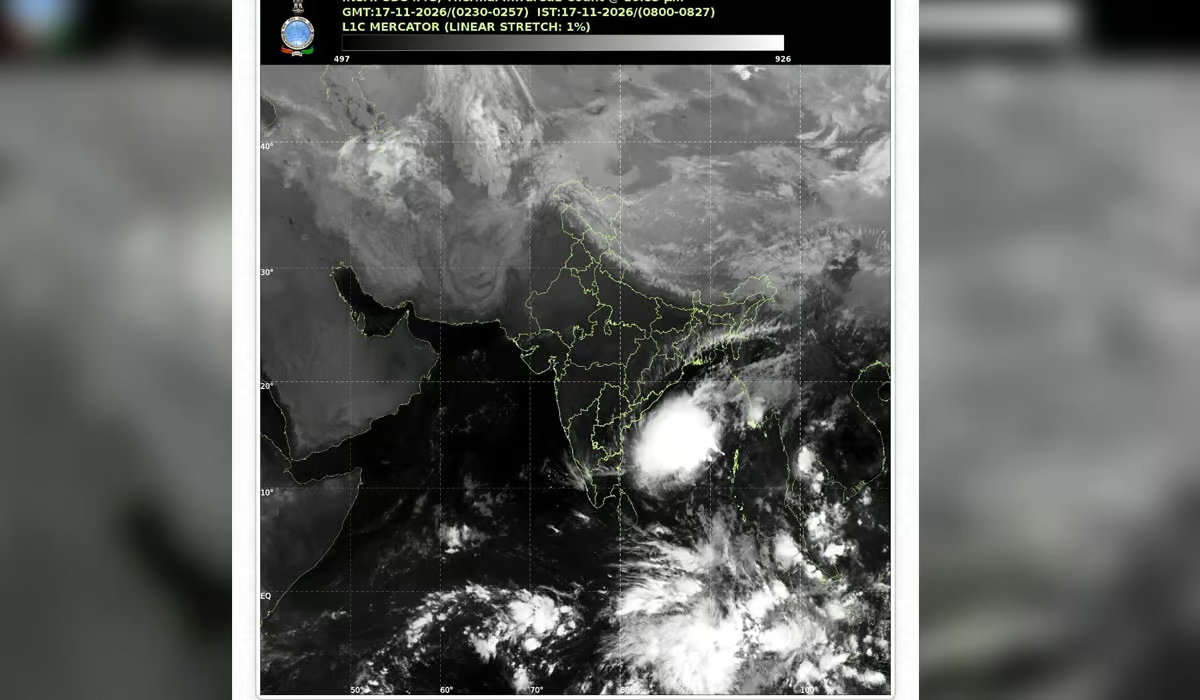
Amaravati: Andhra Pradesh is bracing for another major cyclone as Cyclonic Storm Akvan over the Bay of Bengal is expected to intensify into a very severe cyclonic storm before crossing the state’s coast on November 20. The India Meteorological Department (IMD) has issued an Orange Alert for Andhra Pradesh and adjoining south Odisha coasts, warning of extremely heavy rainfall, destructive winds and possible storm surges.
According to the IMD, Akvan is likely to intensify into a severe cyclonic storm by Tuesday evening and further strengthen into a very severe cyclonic storm by November 19. It is expected to cross the Andhra Pradesh-Yanam coast between Nellore and Tuni around noon on November 20, with wind speeds of 120-130 kmph and gusts reaching 145 kmph.
Kakinada, Konaseema, East and West Godavari, Eluru, Krishna, Bapatla and Yanam are among the areas likely to receive extremely heavy rainfall. Storm surges of one to two metres above astronomical tide could inundate low-lying coastal areas, particularly in Bapatla, Krishna and West Godavari districts.
The cyclone could damage houses, uproot trees, disrupt power and communication networks and cause extensive damage to standing crops, particularly banana, papaya and horticultural plantations. Fishermen have been advised not to venture into the sea, while coastal residents have been urged to move to safer locations.
The threat comes after Cyclone Arnab and Cyclone Murasu raised concerns over extreme weather conditions in the region. The devastating impact of Cyclone Hudhud in October 2014, which caused widespread destruction in Visakhapatnam, remains a reminder of Andhra Pradesh’s vulnerability to severe cyclones.
With Akvan approaching, timely evacuations, protection of standing crops and uninterrupted emergency preparedness are crucial to minimise loss of life and property along the coastal districts.


