
Floor Cleaning With Drinking Water Emerges as Major Cause of Water Wastage in Hyderabad
As Hyderabad grapples with growing concerns over water conservation, a new form of potable water misuse has come under the spotlight, with residents allegedly using drinking water to mop floors, wash driveways and clean premises.

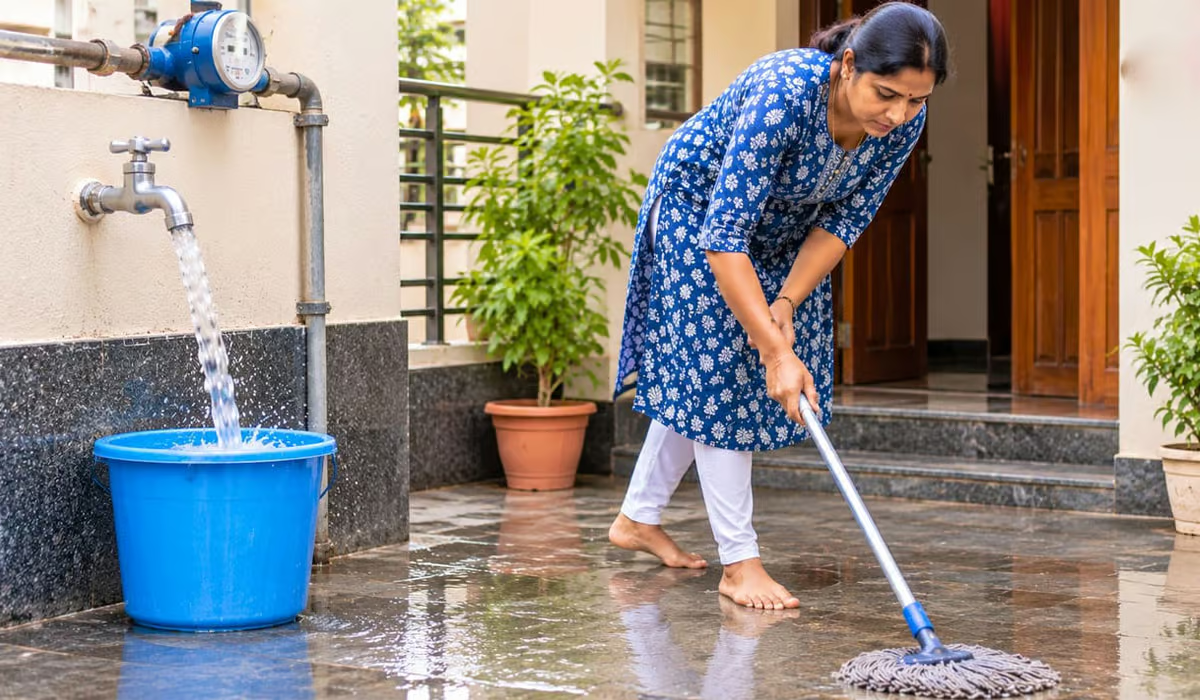
Hyderabad: As Hyderabad grapples with growing concerns over water conservation, a new form of potable water misuse has come under the spotlight, with residents allegedly using drinking water to mop floors, wash driveways and clean premises.
Surprisingly, this practice has emerged as the most frequently reported violation on the Hyderabad Metropolitan Water Supply and Sewerage Board’s (HMWSSB) PAANI app.
Launched on October 29, the PAANI app has received more than 250 complaints in its first four weeks, of which around 75 relate to residents using drinking water or groundwater for floor cleaning. Most complaints have originated from residential neighbourhoods in Jubilee Hills and Banjara Hills, while Kukatpally, Khairatabad and Mehdipatnam have also reported violations.
Field inspections revealed that some residents were using pressure motors connected to drinking water pipelines to wash floors, driveways and surrounding areas, particularly during morning hours.
The Water Board is imposing penalties ranging from Rs 1,000 to Rs 20,000. Notices are initially issued to violators, while unpaid fines are added to their water bills.
Follow for more details: munsifdaily.com
The app has recorded over 1,000 downloads and around 700 active users. Apart from floor cleaning, it allows citizens to report 10 categories of violations, including illegal motor usage, overflowing tanks, water leakages and misuse of potable water for construction and gardening. Around 60 complaints concern leakages and 31 involve washing streets with drinking water.
Since January, HMWSSB has penalised nearly 1,700 residents and collected penalties totalling approximately Rs 50 .
With Hyderabad facing mounting pressure on its water reserves, responsible consumption has become a collective necessity. Residents must shift non-essential activities such as floor cleaning, vehicle washing and gardening to treated wastewater from sewage treatment plants. Citizen participation through PAANI can strengthen monitoring, but lasting water security requires a change in everyday habits.


