
Iran’s President says negotiation with US does not mean surrender
Iranian President Masoud Pezeshkian has said that negotiating with the United States did not mean surrender.

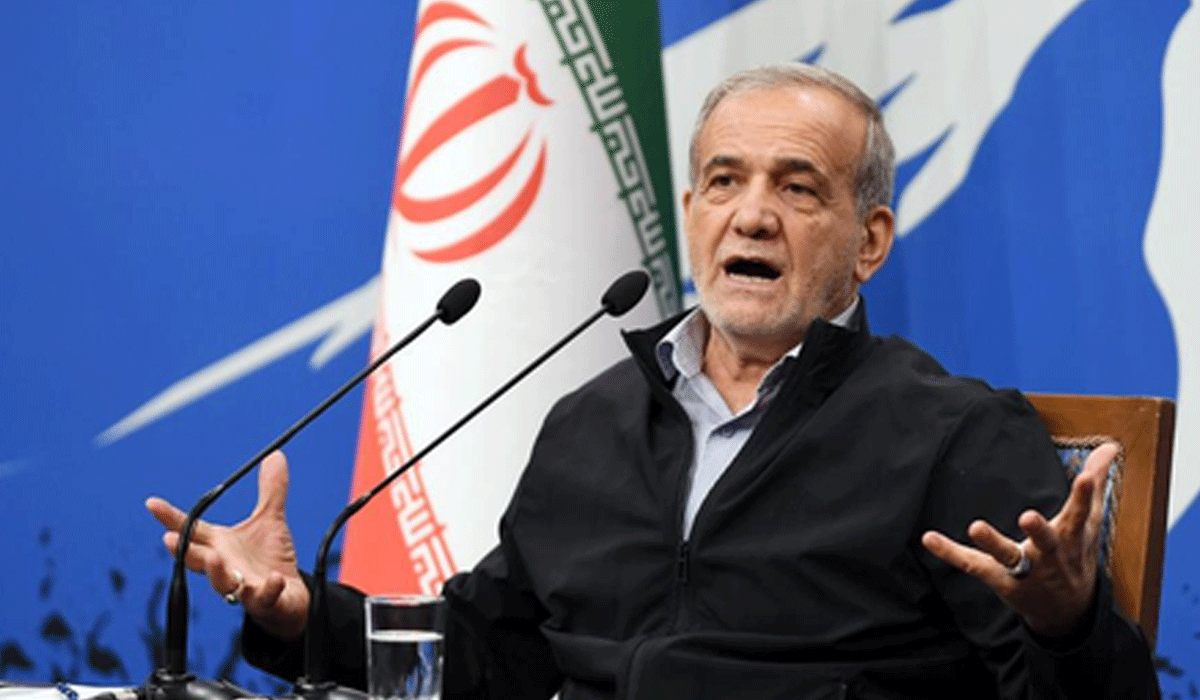

Tehran: Iranian President Masoud Pezeshkian has said that negotiating with the United States did not mean surrender.
At a conference in Tehran on Wednesday (local time), Pezeshkian stressed the need to defend Iran’s territorial integrity, according to a statement posted on his office’s website.
“In the process of negotiations, we are moving forward step by step at the height of our power and while maintaining wisdom, dignity and expediency,” Pezeshkian said.
“Our goals have been to end the war, lift the (anti-Iran naval) blockade, release the country’s frozen assets and, then, (hold) nuclear talks,” he noted.
US President Donald Trump reportedly told top administration envoys to halt their conversations with Iran on Tuesday, local media reported, citing a US official, reports Xinhua news agency.
On Wednesday, Trump announced a “crushing economic operation” on Iran, hours after saying that the situation with Iran is “so good.”
Tehran and Washington signed a memorandum of understanding (MoU) on ending the war on all fronts on June 18.
Yet, it remains unclear how the talks will proceed after a 60-day negotiating period under the MoU ended on Monday and tensions between the two sides escalated last month.
Additionally, a senior Iranian lawmaker said Wednesday that a draft plan under review by Iran’s parliament to safeguard security in the Strait of Hormuz would bar hostile and espionage vessels from transiting the strategic waterway.
In an interview with state-run IRIB TV, Ebrahim Rezaei, a member of the parliament’s national security and foreign policy committee, elaborated on the plan, whose general outlines have been approved by the committee.
The plan stipulates that vessels deemed hostile or involved in espionage activities that could threaten Iran’s national security would not be allowed to pass through the strait, Rezaei said.
He added that Israeli military or civilian vessels would also be prohibited from transiting the waterway, with enforcement to be supervised by Iran’s General Staff of the Armed Forces.
Rezaei said the plan included provisions for charging passage fees in the Iranian rial or other currencies, as well as penalties for vessels violating the regulations.
“If someone in another part of the world harms Iran’s interests or our citizens, we will deal with that government in the Strait of Hormuz,” he said, adding that the plan allows for measures including cargo confiscation and higher tariffs against governments that take hostile positions toward Iran.
Rezaei said the Strait of Hormuz had become a national security concern for Iran following US and Israeli strikes against Iran, and that Tehran must maintain control of the waterway to prevent military threats.
The parliamentary committee approved the general outlines of the plan earlier this month, Iran’s official news agency IRNA reported.


