
Successive Weather Disasters Damage 12.64 Lakh Hectares of Kharif Crops in Andhra Pradesh
Successive weather disasters have dealt a severe blow to agriculture in Andhra Pradesh, damaging Kharif crops across 12.64 lakh hectares, accounting for nearly 41 per cent of the state's total cultivated area.

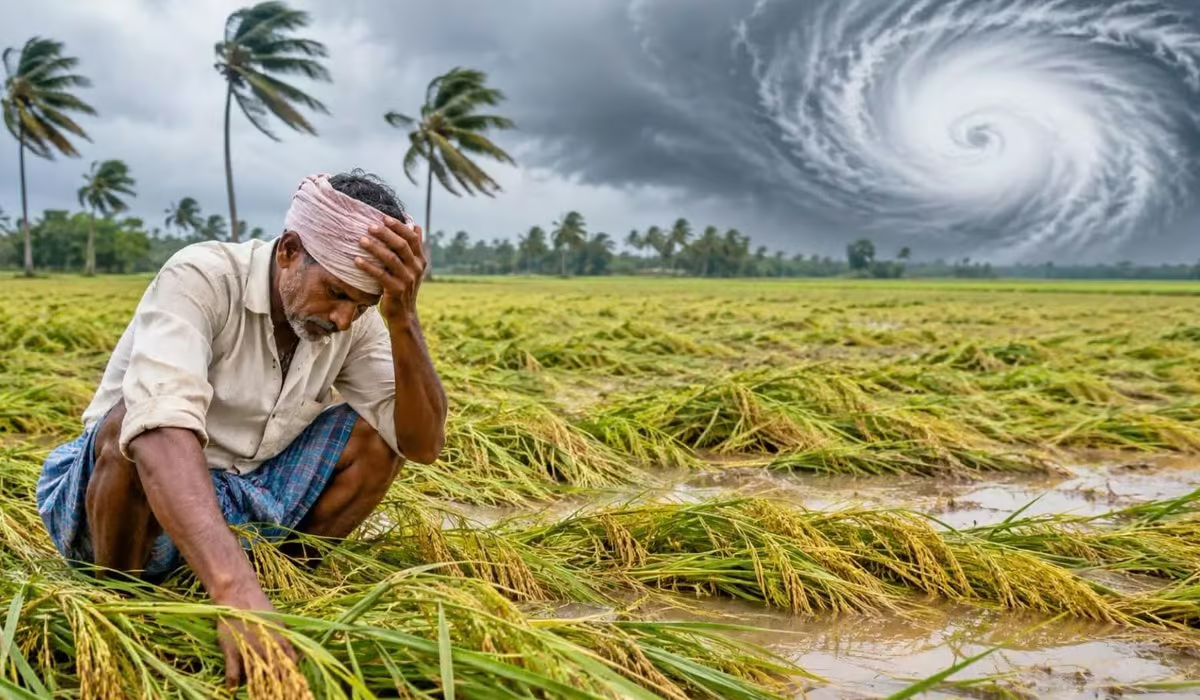
Amaravati: Successive weather disasters have dealt a severe blow to agriculture in Andhra Pradesh, damaging Kharif crops across 12.64 lakh hectares, accounting for nearly 41 per cent of the state’s total cultivated area. According to preliminary estimates by the Agriculture and Horticulture departments, around 14.59 lakh farmers have suffered investment losses due to deficient rainfall, heavy rains, floods and successive cyclones.
The affected farmers are expected to receive approximately ₹2,244 crore as input subsidy from the state government. Additionally, farmers covered under crop insurance schemes are likely to receive compensation of around ₹1,732 crore.
The agricultural crisis began with a severe rainfall deficit during the initial Kharif season, reportedly influenced by El Niño-related weather fluctuations. The deficient rainfall affected nearly 9.30 lakh hectares of agricultural crops belonging to 9.87 lakh farmers. Horticultural crops were damaged across another 38,458 hectares.
Although water was released into the delta region to support cultivation, subsequent cyclones worsened the situation. Cyclone Arnab, which struck during the last week of October, damaged crops across 2.24 lakh hectares, affecting 3.83 lakh farmers. Horticultural crops suffered losses over another 19,976 hectares.
Before farmers could recover, severe cyclonic storm Murasu hit the state in the first week of November. It inundated 32,622 hectares of agricultural land, affecting 52,402 farmers, particularly in areas where floodwater remained stagnant.
In December 2023, Cyclone Michaung caused extensive flooding in Andhra Pradesh, particularly in agricultural areas, damaging paddy and horticultural crops. The present crisis once again highlights farmers’ vulnerability to extreme weather events. Timely input subsidies, insurance settlements, better drainage infrastructure and climate-resilient farming practices are essential to protect agricultural livelihoods and strengthen the state’s food security.
Follow for more details: Munsifdaily.com


