
No AC, No Toilets, No Galley: U.S. Destroyer Hit by Four-Day Power Failure
USS Benfold Loses Power in South China Sea, Towed to Philippines After Four-Day Breakdown

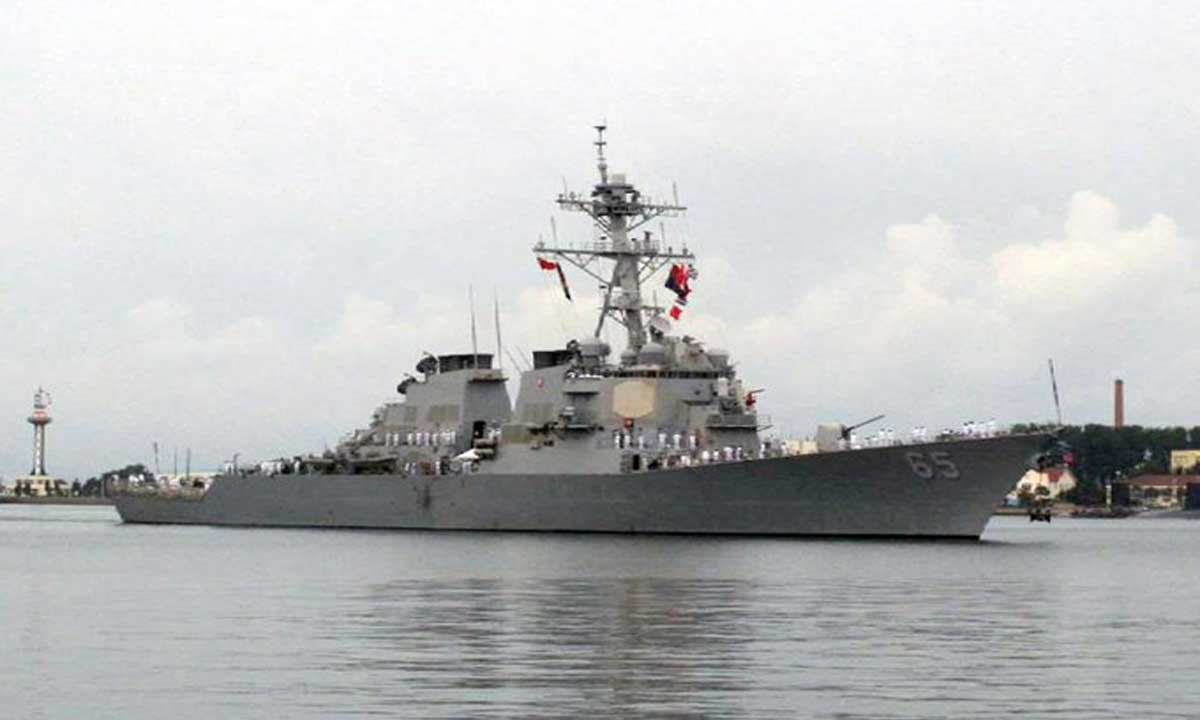

Manila/Washington: The U.S. Navy destroyer USS Benfold suffered a major engineering failure while operating in the South China Sea, leaving the warship without electrical power for about four days, according to reports.
The incident reportedly disrupted several essential services aboard the Arleigh Burke-class guided-missile destroyer, including air conditioning, toilets and galley facilities. The loss of power created difficult conditions for the crew, particularly in the hot and humid environment of the South China Sea.
The destroyer was eventually towed to the Philippines for further assistance and repairs after the crew was unable to restore the ship’s power sufficiently to continue the mission.
Engineering failure affected essential systems
The problem was reportedly linked to an engineering casualty, which resulted in the loss of the ship’s electrical generation and affected multiple onboard systems. Without adequate power, basic facilities such as climate control, sanitation and food-service operations were disrupted.
The incident highlights how a failure in a warship’s engineering and electrical systems can quickly affect not only its combat capabilities but also basic living conditions for hundreds of sailors.
USS Benfold — a guided-missile destroyer
The USS Benfold (DDG-65) is an Arleigh Burke-class guided-missile destroyer operated by the U.S. Navy. The ship is designed for a wide range of missions, including air defence, anti-submarine warfare, surface warfare and missile operations.
The vessel is part of the U.S. Navy’s forward-deployed presence in the Indo-Pacific, a strategically important region where the United States regularly conducts patrols and exercises.
Towed to the Philippines
After remaining without normal power for several days, the destroyer was towed to the Philippines, where it could receive technical support and undergo repairs.
The incident comes amid heightened U.S. naval activity in the South China Sea, one of the world’s most strategically contested maritime regions. The area is also subject to overlapping territorial claims, particularly involving China and several Southeast Asian countries.


