
Telangana Government Plans Six-Month Statewide Water Conservation Programme from January 2027
The Telangana government is planning to launch a six-month statewide programme from January to June 2027 to restore, rejuvenate and conserve water resources across all villages.

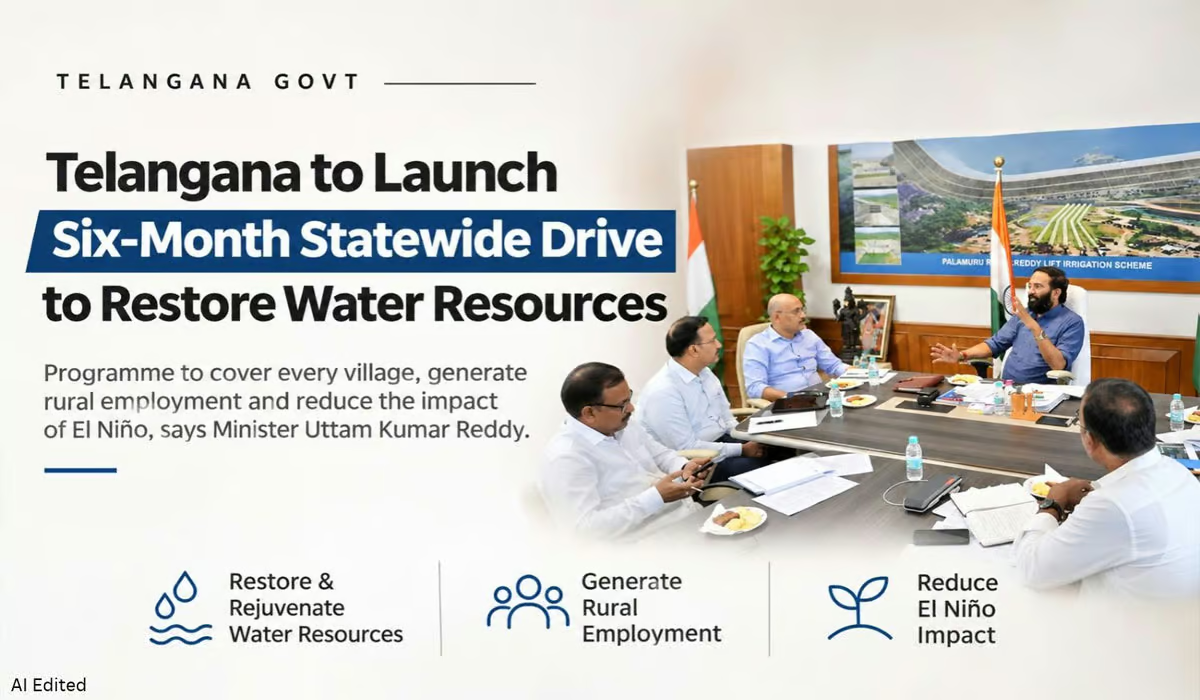
Hyderabad: The Telangana government is planning to launch a six-month statewide programme from January to June 2027 to restore, rejuvenate and conserve water resources across all villages.
The initiative will also focus on generating rural employment opportunities while addressing the challenges posed by El Niño conditions, Irrigation Minister N. Uttam Kumar Reddy said.
Addressing a high-level review meeting at the State Secretariat on Thursday, the minister said the Panchayat Raj and Rural Development departments would jointly prepare a comprehensive action plan for implementation ahead of the next monsoon.
He said the government aims to turn the impact of El Niño into an opportunity to create permanent water assets, strengthen irrigation infrastructure and improve groundwater availability. A list of 355 categories of works has already been prepared for implementation during the programme.
The initiative will primarily utilise the employment guarantee framework, with the existing 60:40 funding arrangement supplemented by additional state assistance wherever required.
Follow for more details: munsifdaily.com
Major activities will include desilting and rejuvenation of minor irrigation tanks, village ponds, feeder channels and canals. Restoration of traditional water-harvesting structures, damaged sluice gates, removal of accumulated silt and vegetation, and repairs to tank infrastructure will also be undertaken.
During the severe drought conditions in Telangana in 2015-16, declining groundwater levels and inadequate rainfall affected agricultural activities and rural livelihoods. The situation highlighted the importance of restoring traditional water bodies and strengthening local irrigation systems.
The proposed programme could help prevent similar water shortages by improving storage capacity, groundwater recharge and irrigation facilities. Additionally, involving agricultural labourers through employment guarantee programmes could provide income support to rural households. Successful implementation will depend on proper funding, village-level participation and regular monitoring to ensure that restored water assets remain functional.


