
First Total Solar Eclipse of 2026 on August 12: Will India See It? Check Time, Visibility and Safety
The August 12 eclipse will be visible in some form from around 55 countries. However, only selected areas of Spain and Iceland are expected to experience the total phase, while several other regions will see a partial eclipse.

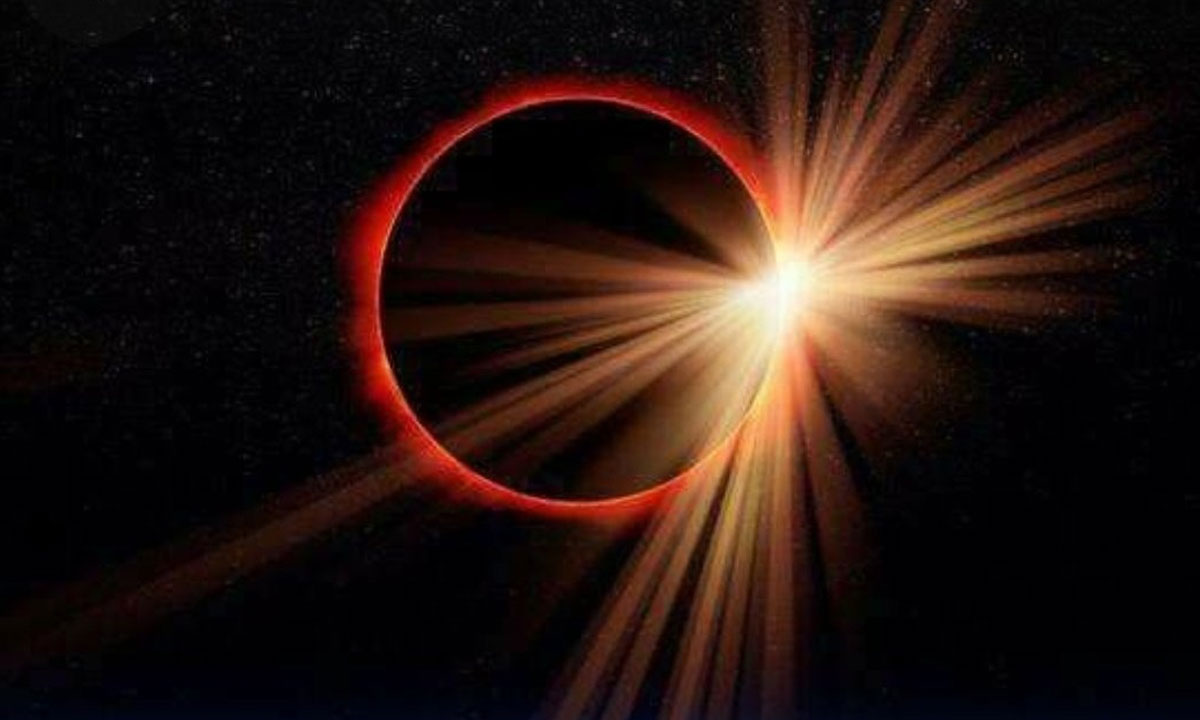

Hyderabad: Skywatchers around the world are preparing for a rare celestial event as the first total solar eclipse of 2026 is set to occur on August 12. The eclipse is expected to attract significant attention from astronomers and space enthusiasts, with parts of the world set to witness the Moon completely covering the Sun.
But there is one important point for people in India: the eclipse will not be visible from any part of the country.
The August 12 eclipse will be visible in some form from around 55 countries. However, only selected areas of Spain and Iceland are expected to experience the total phase, while several other regions will see a partial eclipse.
The eclipse path will extend across Greenland, the Atlantic Ocean and northern parts of Russia. Partial phases will also be visible from parts of North America and Canada, several European countries and areas of northwestern Africa.
Spain is expected to be one of the key viewing locations. The event is particularly notable because a total solar eclipse has not been seen there for more than a century. The previous total eclipse visible in Spain occurred on July 18, 1860.
According to the timings provided for Indian Standard Time, the partial eclipse is expected to begin at around 7 pm on August 12. The total phase is scheduled to start at approximately 9:15 pm, with the eclipse reaching its maximum at around 11:17 pm. The total phase is expected to end at about 1:20 am on August 13, while the entire eclipse is expected to conclude around 3:30 am.
A total solar eclipse occurs when the Moon passes directly between the Earth and the Sun and completely blocks the Sun’s visible disk from certain locations. During the brief total phase, areas along the central path can experience a dramatic drop in daylight, creating an unusual twilight-like atmosphere.
One of the most fascinating sights during totality is the Sun’s outer atmosphere, known as the corona. Under normal conditions, the corona is difficult to observe because of the Sun’s intense brightness. During totality, however, it becomes visible around the darkened Moon. Scientists can use this opportunity to study the corona, solar wind and changes in the Sun’s magnetic environment.
In some European locations, the partial eclipse is expected to coincide with sunset. This could create a striking phenomenon in which the partially eclipsed Sun disappears below the horizon.
Since the eclipse will not be visible in India, people across the country will not have a direct view of the event. Religious traditions regarding eclipses can vary, and many customs are traditionally associated with places where an eclipse is actually visible.
For anyone watching the eclipse from a location where it can be seen, eye safety is extremely important. Looking directly at the Sun without proper protection can cause serious and potentially permanent damage to the eyes.
Special-purpose solar eclipse glasses or viewers meeting recognised safety standards should be used. Ordinary sunglasses are not sufficient. Homemade filters, X-ray film, coloured glass and other improvised methods should also be avoided.
The same caution applies to cameras, binoculars and telescopes. These devices should never be used to view the Sun unless they are equipped with a properly designed solar filter.
The August 12 total solar eclipse is expected to be a spectacular astronomical event for viewers along its path, but it will remain out of sight for observers in India. Experts advise the public to rely on verified scientific information rather than rumours or fear surrounding eclipses.
For those who follow religious traditions, the day may be observed according to their personal beliefs and customs, including prayer, meditation, charity and remembrance of ancestors.


